The Ten Mahavidyas

The Ten Mahavidyas and Adi Maa

Meet the ten forms of the Divine Mother honoured in our Puja and learn about Adi Maa's place at the centre of our celebration.

An Introduction

One Divine Mother, ten great forms of wisdom

The word Mahavidya is often understood as “great wisdom” or “great knowledge”. The Dasha Mahavidyas are ten forms of the Divine Mother honoured in Shakta traditions. Each has a distinct name, appearance and meaning. Some are shown as gentle and graceful; others appear fierce or unusual. Together, they offer different ways of understanding the power, wisdom and presence of the Divine Mother.

In our celebration, the first Mahavidya is worshipped as Maa Shabashivam Kali. The other forms introduced here are Maa Tara, Maa Shodashi (Shoroshi), Maa Bhuvaneshwari, Maa Bhairavi, Maa Chhinnamasta, Maa Dhumavati, Maa Bagalamukhi (Bogola), Maa Matangi and Maa Kamala (Komola). Kumari Puja is also performed on the night of Dasamahavidya Puja. Names, images and interpretations may differ across traditions; the descriptions below offer a simple introduction for visitors of all ages.

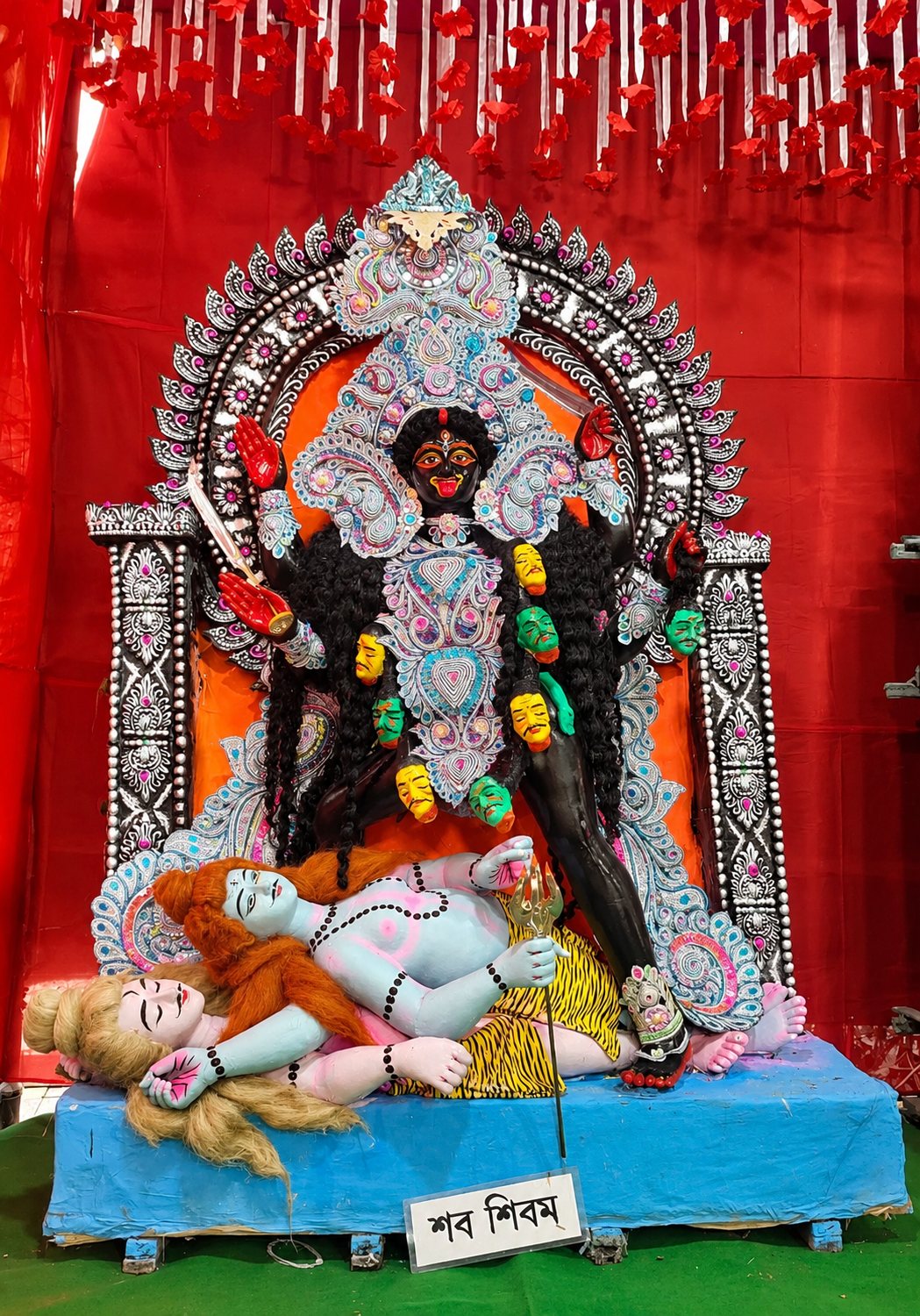
Maa Shabashivam Kali — the first Mahavidya of the Chetla celebration, standing in her fierce form upon the reclining figures, with her nameplate 'শবশিবম' below
01

Maa Shabashivam Kali

Power, time and transformation

At our Puja, Maa Shabashivam Kali is honoured as the first of the ten Mahavidyas. Kali is a deeply revered form of the Divine Mother, especially in Bengal, and is often shown in a powerful, fierce form. In Shakta traditions, this imagery expresses the force of Shakti and the power of transformation. We use the full name Maa Shabashivam Kali for the form worshipped in our celebration.
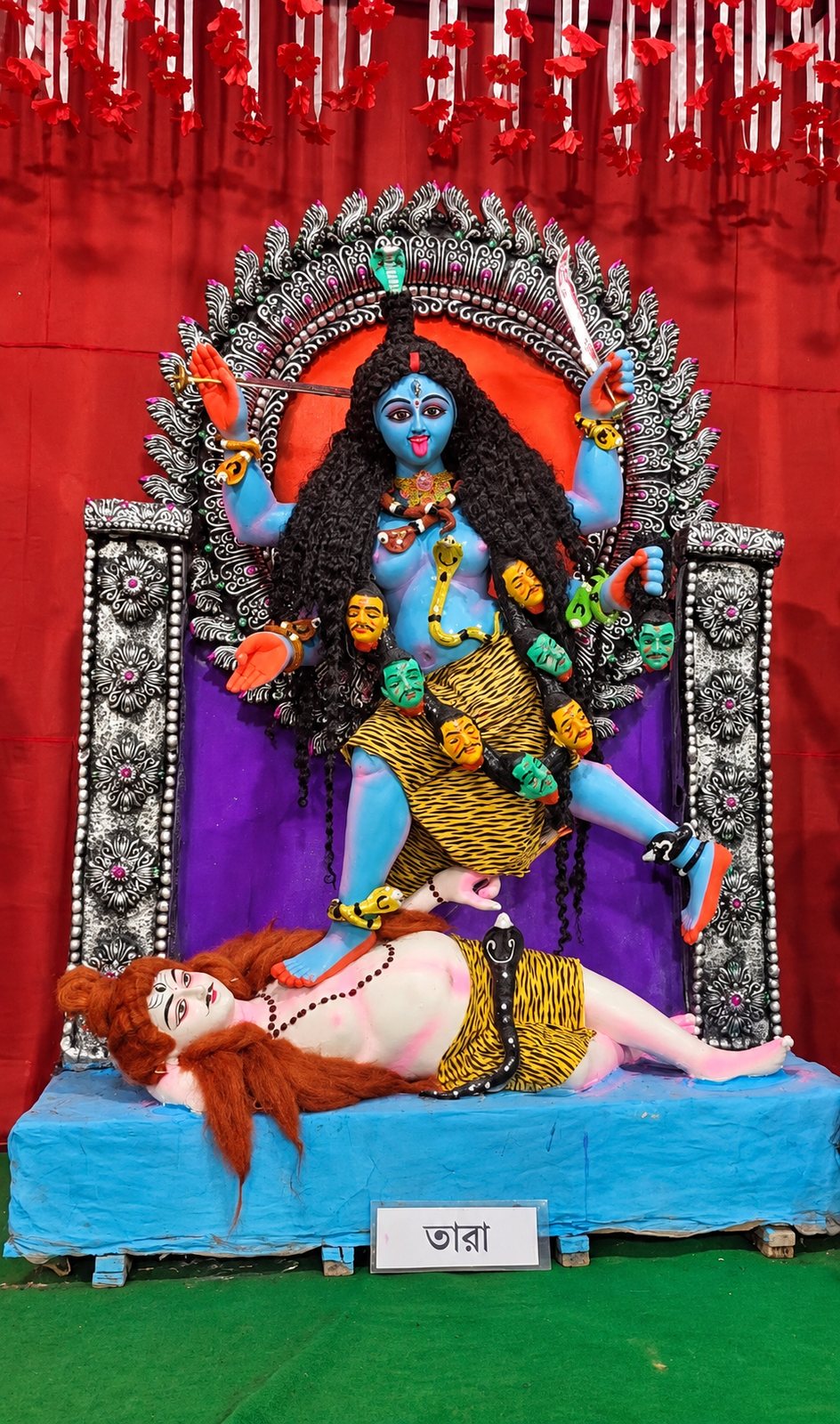
Maa Tara — the blue Goddess standing upon the reclining Shiva, wearing a tiger skin and a garland of heads, her nameplate 'তারা' below
02

Maa Tara

The guide through difficulty

Maa Tara is often described as a guide who helps devotees cross difficulties and move towards spiritual freedom. In the Mahavidya tradition, she is connected with wisdom and protection. Some images of Maa Tara may resemble images of Maa Kali, but Tara has her own identity, stories and place in worship.

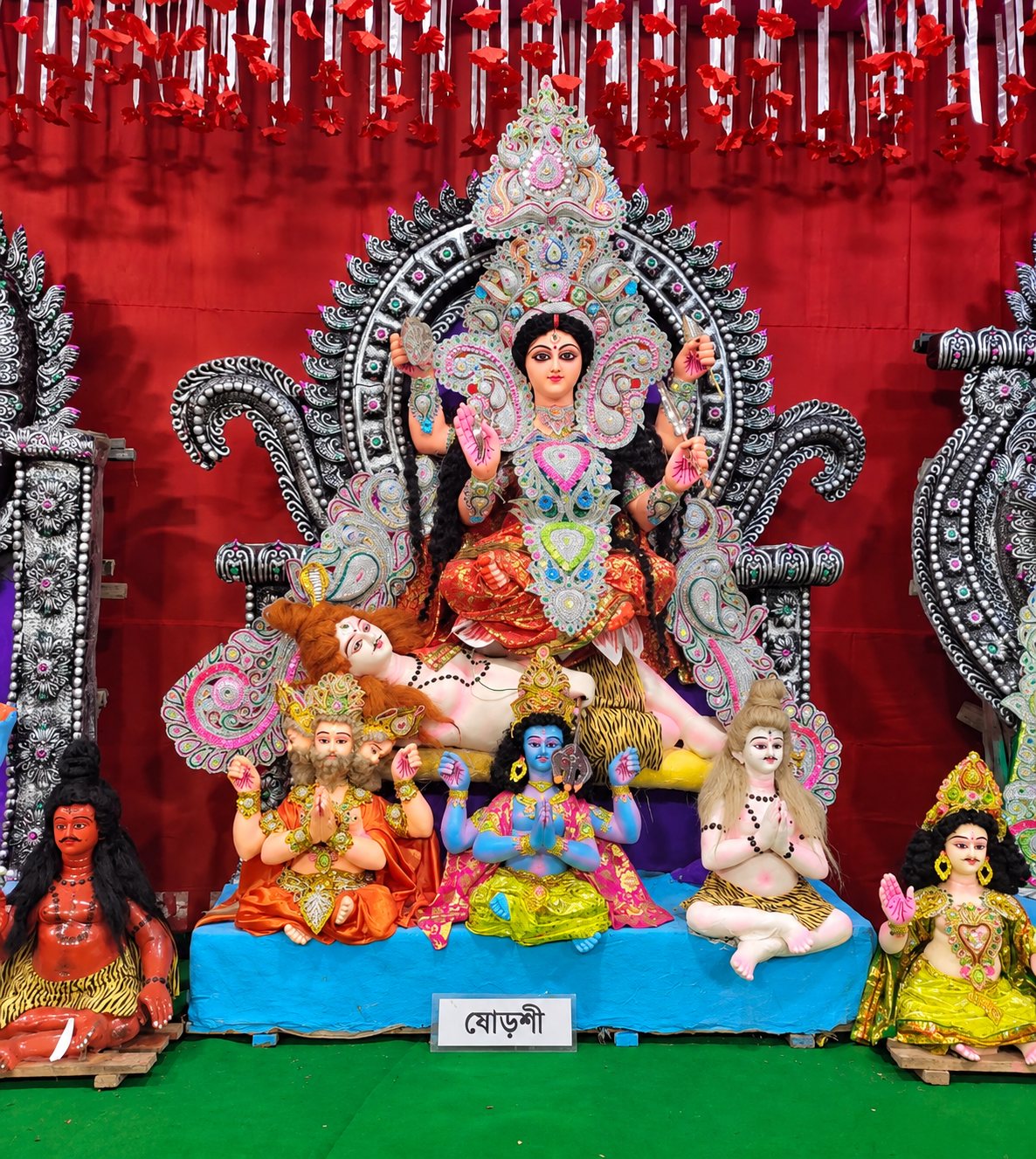
Maa Shoroshi (Shodashi) enthroned in red and silver, with the assembled deities at her feet and her nameplate 'ষোড়শী' below
03

Maa Shodashi / Tripura Sundari — Maa Shoroshi

Beauty of the three worlds

Maa Shoroshi, also known as Shodashi or Tripura Sundari, is associated with beauty and grace across the three worlds. She holds an important place in Sri Vidya traditions. Her name and imagery point to divine beauty and fullness. Her appearance is shown in different ways across religious texts, artworks and traditions.

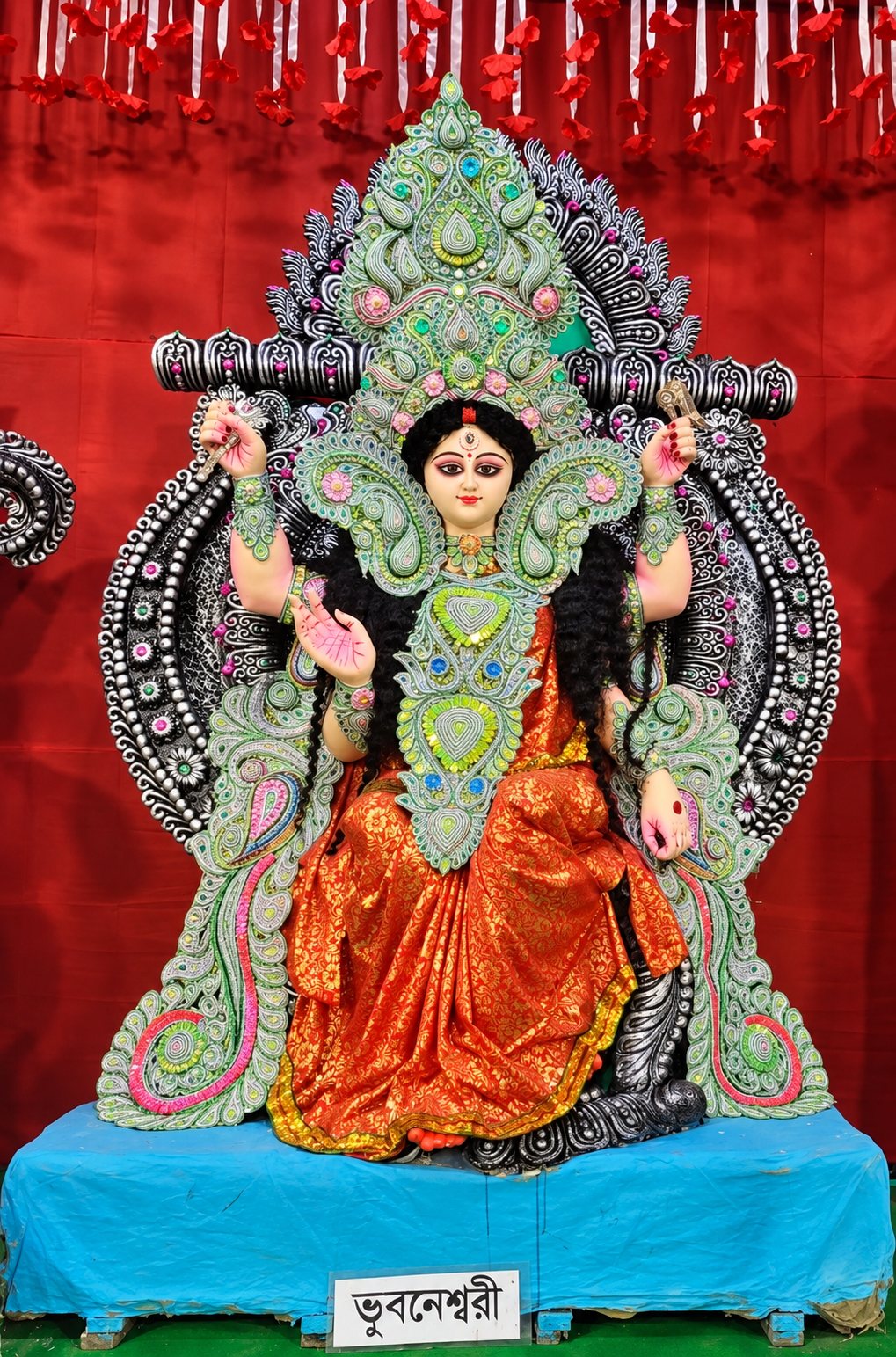
Maa Bhuvaneshwari enthroned in orange and green, four-armed, with her nameplate 'ভুবনেশ্বরী' below
04

Maa Bhuvaneshwari

The Lady of the Worlds

Maa Bhuvaneshwari is associated with the worlds and the universe. She is often understood as a form of the Divine Mother whose presence embraces all creation. Traditional descriptions also connect her with knowledge and the elements that make up the physical world. Her name reminds us of the vastness of the universe and the Goddess's place within it.

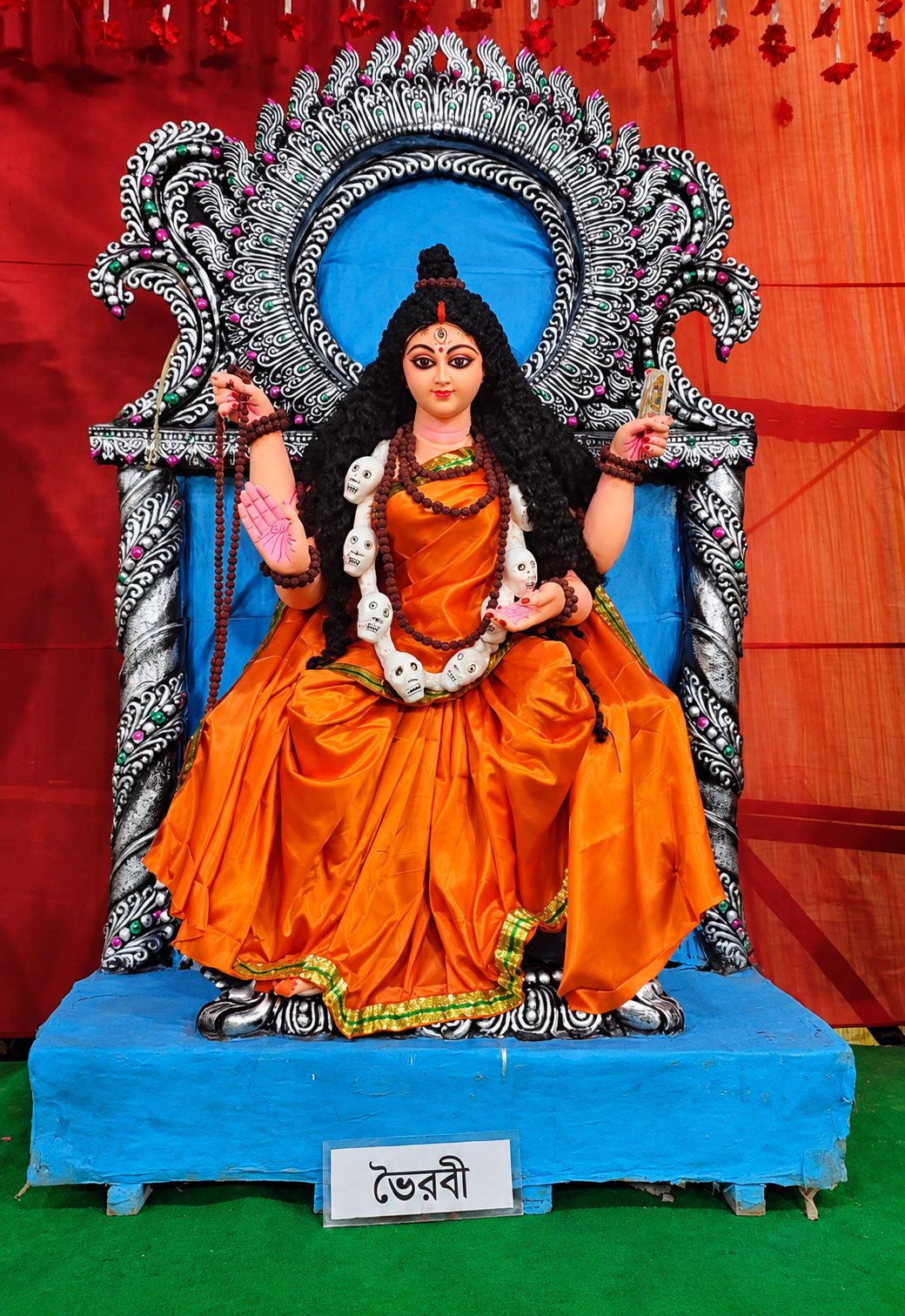
Maa Bhairavi seated in orange robes with rudraksha beads and a garland of skulls, her nameplate 'ভৈরবী' below
05

Maa Bhairavi

The fierce and formidable Goddess

Maa Bhairavi is a fierce and powerful form of the Divine Mother. Her name is linked with Bhairava, a formidable form of Shiva. Her traditional imagery speaks to themes of change, endings and mortality. Though her appearance can be intense, she is approached with reverence in Shakta traditions.

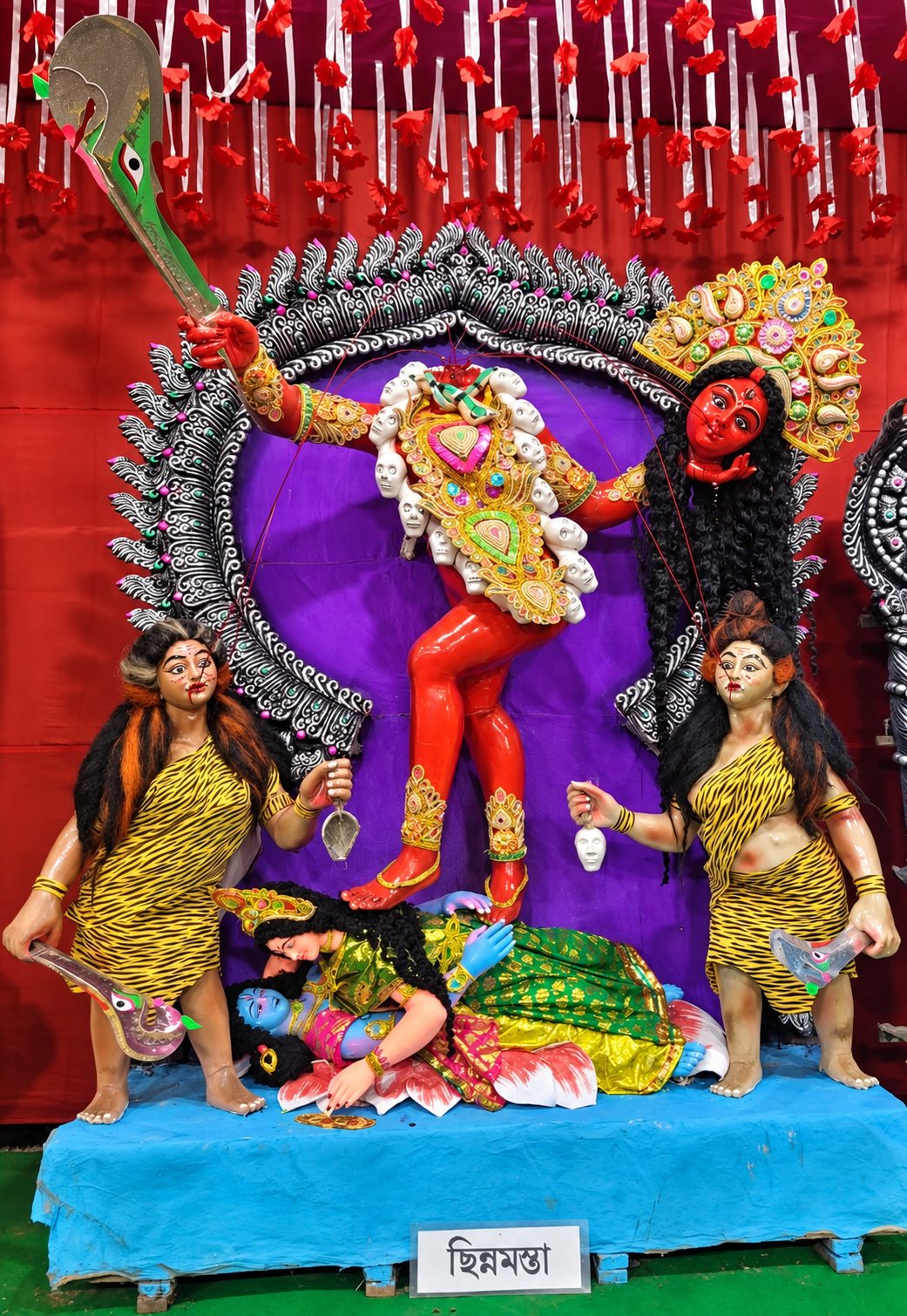
Maa Chhinnamasta — the crimson Goddess holding her own head and the scimitar, flanked by her two attendants, with her nameplate 'ছিন্নমস্তা' below
06

Maa Chhinnamasta — Maa Chhinamasta

A striking and powerful form

Maa Chhinnamasta is one of the most striking forms among the Mahavidyas. In traditional images, she holds her own severed head, with streams of blood shown flowing from her neck. This intense image has been interpreted in connection with life-force, self-offering and the close relationship between life and death. Its meaning is complex, and explanations differ across traditions.

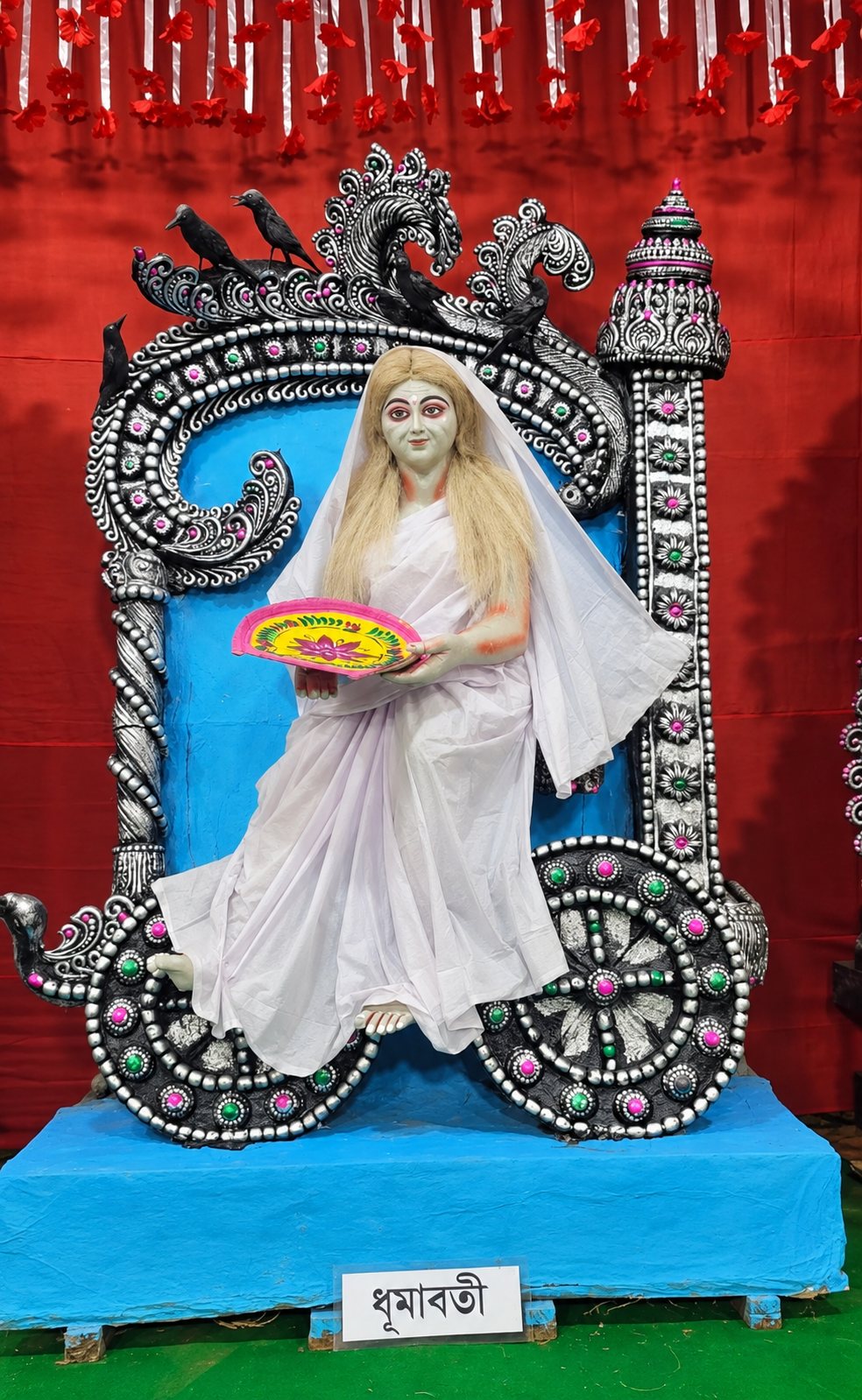
Maa Dhumavati — the pale Goddess in white widow's robes holding the winnowing fan, crows perched on her black-and-silver arch, with her nameplate 'ধূমাবতী' below
07

Maa Dhumavati

Wisdom in life's difficult moments

Maa Dhumavati has a unique place among the ten Mahavidyas. In some traditional images, she appears as an elderly widow. Her form is associated with difficult parts of life—such as loss, loneliness and uncertainty—that people may prefer not to speak about. In the Mahavidya tradition, she is treated with reverence and reminds us that wisdom is not found only in happiness, beauty or prosperity; it can also come from facing life's hardships. Different traditions interpret her symbolism in different ways.

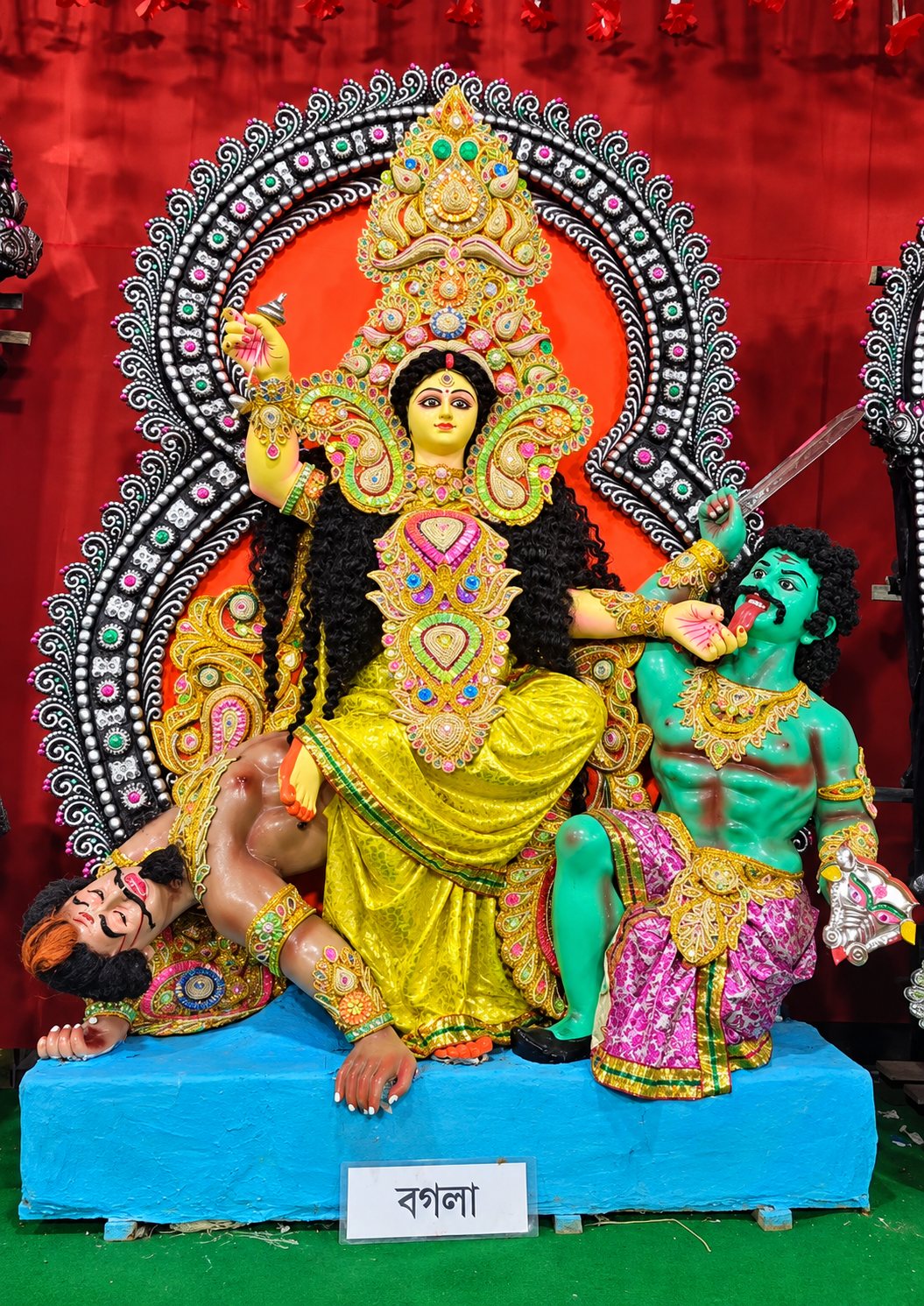
Maa Bagalamukhi (Maa Bogola) at the Chetla Dasamahavidya Puja — the golden-robed Goddess seated, holding the tongue of the restrained opponent, with her nameplate below
08

Maa Bagalamukhi — Maa Bogola

The power to still or restrain

Maa Bagalamukhi, known in Bengali as Maa Bogola, is associated with the power to still or restrain harmful actions and speech. In traditional images, she is shown holding an opponent's tongue, symbolising the power to stop damaging words or disruptive forces.

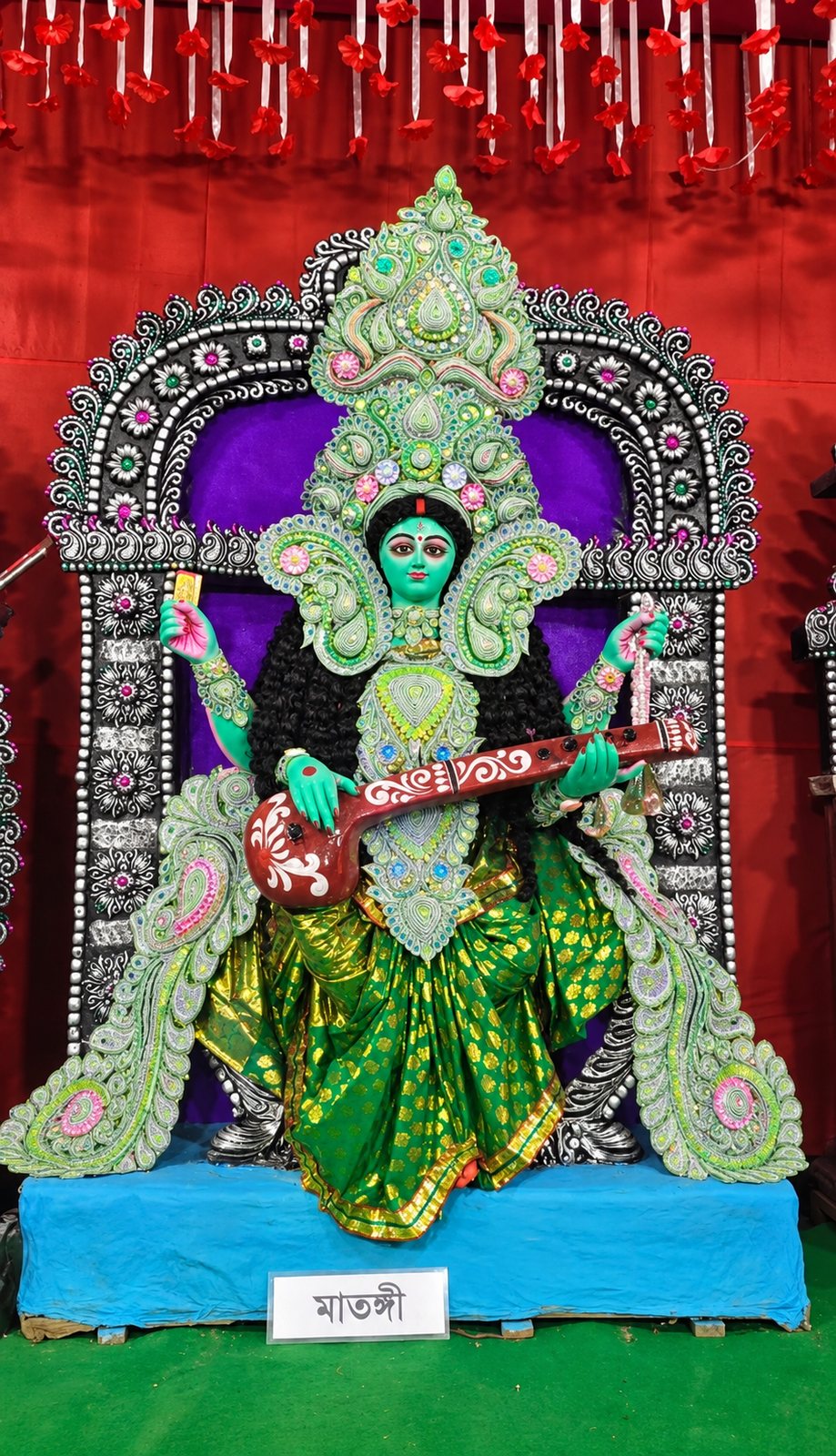
Maa Matangi in green, playing the veena, with her nameplate 'মাতঙ্গী' below
09

Maa Matangi

Wisdom, speech, music and the arts

Maa Matangi is associated with speech, music, learning, knowledge and the arts. She is sometimes compared with Saraswati, though she has her own identity in Mahavidya traditions. Her stories and imagery also explore social boundaries and ideas of purity. She reminds us that wisdom and creativity can be understood in more ways than conventional learning alone.

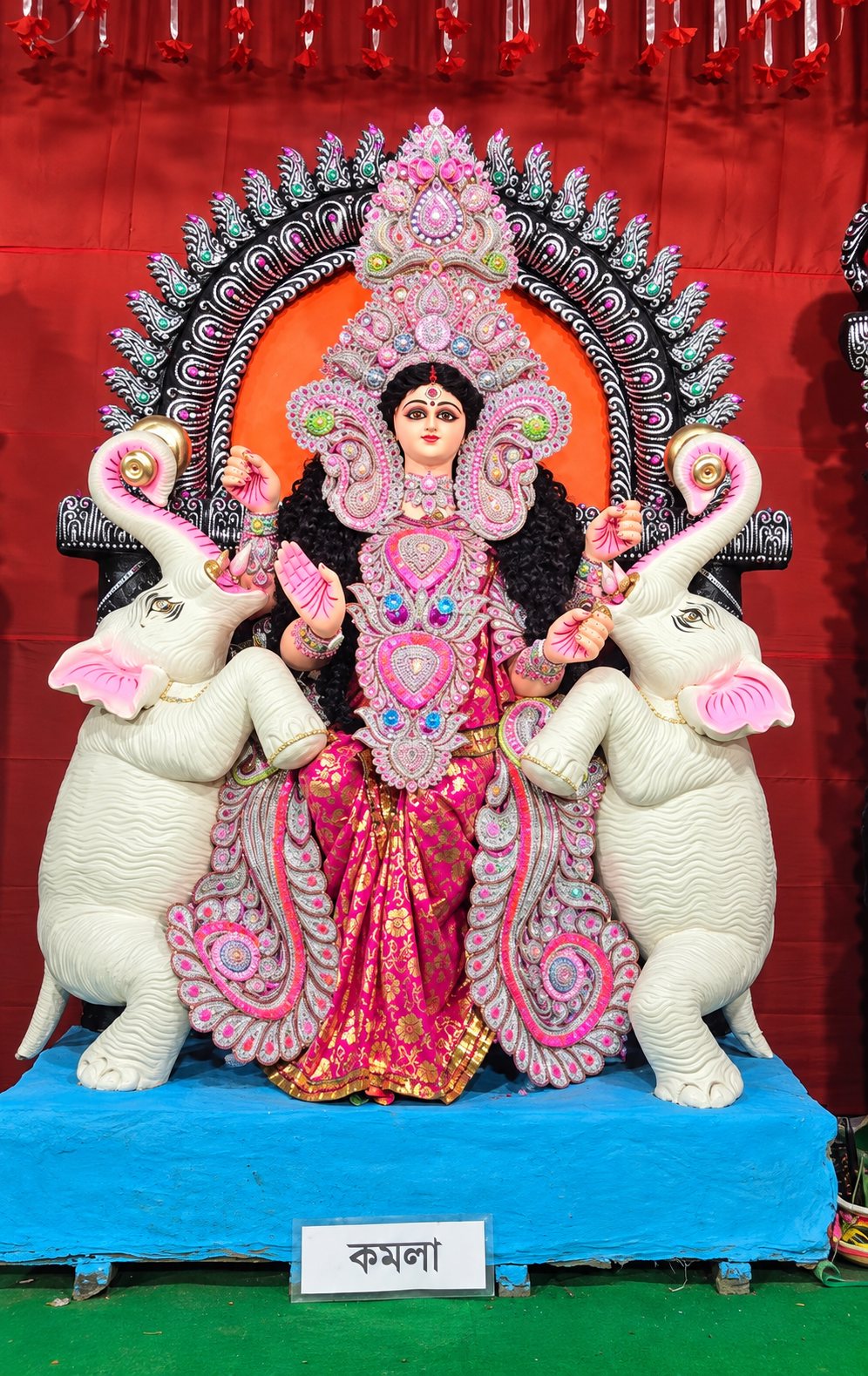
Maa Kamala (Maa Komola) in pink and gold, flanked by two white elephants, with her nameplate 'কমলা' below
10

Maa Kamala — Maa Komola

The lotus and abundance

Maa Kamala, known in Bengali as Maa Komola, is associated with the lotus, prosperity, well-being and abundance. She shares some visual features with Maa Lakshmi, including the lotus as a symbol of beauty and auspiciousness. Within the group of ten Mahavidyas, Maa Kamala has her own distinct place and meaning.

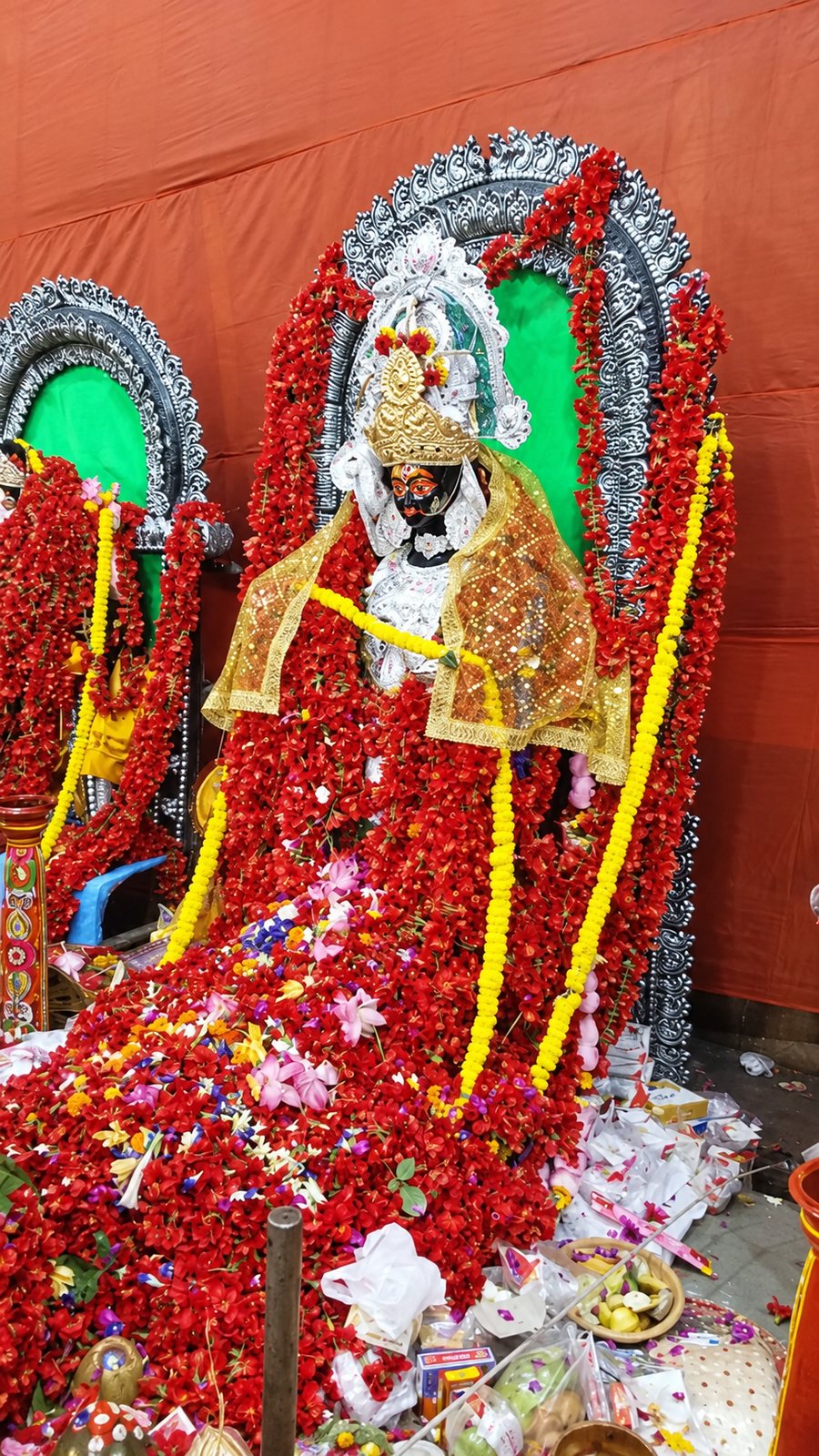
Adi Maa at the Chetla Dasamahavidya Puja — the central idol adorned in red hibiscus garlands with a golden crown and ochre silk, offerings at her feet

At the Centre

Adi Maa at the centre of our Puja

At the centre of our Puja, Adi Maa is placed and worshipped alongside the ten Mahavidyas. This is an important part of how Dasamahavidya Puja is observed in Chetla. The arrangement describes our local celebration; other traditions may arrange or understand the forms differently.

The Wider Celebration

Shyama Maa: part of the wider celebration

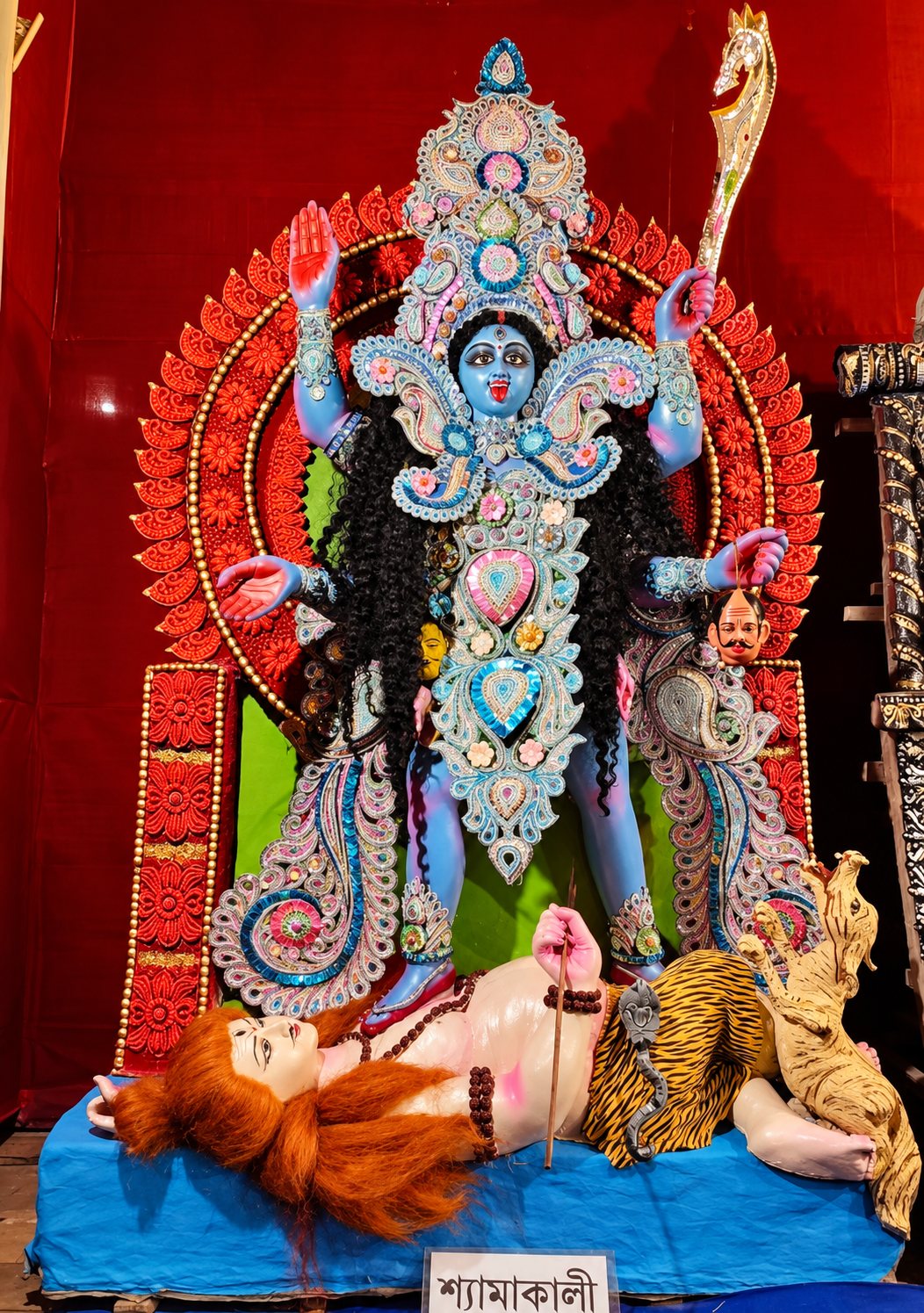
Shyama Maa has a special place in the wider celebration and in the history of our community. In 2026, we celebrate the 112th year of Shyama Puja. After her immersion, the worship of the ten Mahavidyas continues, with their idols remaining alongside Adi Maa. Kumari Puja is performed during the night-long Dasamahavidya observance, which also includes homa/yajna and concludes with morning rites. The final immersion takes place on Chhath Puja, connecting these two parts of our local festival.

Shyama Maa — the blue four-armed Goddess with sword and blessing hand, standing upon the reclining Shiva, her nameplate 'শ্যামাকালী' below